In an increasingly interconnected global economy, multinational enterprises (MNEs) routinely enter into cross-border transactions involving royalties, interest, management fees, shared services, technology, and other intercompany arrangements.
These transactions are a normal part of operating a global business. However, when deductible payments are made by a US corporation to a foreign related party, they can create tax consequences beyond the ordinary calculation of taxable income.
Newsletter
The TaxSpoc Brief
Free weekly brief: the tax stories that matter, for advisors and in-house tax teams.
One important consideration is the Base Erosion and Anti-Abuse Tax (BEAT) under Section 59A of the US Internal Revenue Code (IRC).
Introduced by the Tax Cuts and Jobs Act of 2017, BEAT was designed to limit the ability of certain large corporations to reduce their US tax liability through deductible payments to foreign related parties.
What makes BEAT particularly relevant from a transfer pricing perspective is that a transaction may be priced in accordance with the arm’s-length principle and still create BEAT exposure.
This distinction is important. Transfer pricing examines whether related-party transactions are priced appropriately, while BEAT assesses whether certain payments and associated tax benefits trigger an additional minimum tax under US law.
With changes enacted in 2025 taking effect for tax years beginning after December 31, 2025, understanding the current rules is especially important for multinational groups planning their US tax positions.
1. What is BEAT?
BEAT is a minimum tax imposed on certain large corporations that make qualifying payments to foreign related parties.
Unlike a conventional tax on a particular transaction, BEAT operates by comparing a corporation’s regular US tax liability with a separate calculation based on its modified taxable income.
In broad terms, the calculation involves:
-
Identifying qualifying payments to foreign related parties.
-
Determining the deductions or other tax benefits attributable to those payments.
-
Adding back relevant base erosion tax benefits when calculating modified taxable income.
-
Applying the applicable BEAT rate.
-
Comparing the resulting amount with the corporation’s regular tax liability, adjusted under the statutory credit rules.
The tax is generally payable only when the BEAT calculation exceeds the relevant adjusted regular tax liability. BEAT is therefore not a tax on every cross-border related-party payment. Its application depends on the taxpayer’s status, the nature of the payment, the resulting tax benefit, and the statutory calculation.
2. Which corporations are subject to BEAT?
A corporation generally needs to satisfy three principal conditions to qualify as an applicable taxpayer.
A. Corporate status
The rules generally apply to corporations other than regulated investment companies (RICs), real estate investment trusts (REITs), and S corporations.
B. Gross receipts threshold
The corporation must generally have average annual gross receipts of at least US$500 million over the three-tax-year period ending with the preceding tax year. This test is subject to aggregation rules. Consequently, a US subsidiary should not automatically assess the threshold using its standalone revenue alone.
The gross receipts of relevant group members may need to be considered under the applicable controlled group rules.
C. Base erosion percentage threshold
The corporation must generally meet a base erosion percentage of 3% or more for most applicable taxpayers, or 2% or more for taxpayers within the specified affiliated groups that include a qualifying bank or registered securities dealer.
The base erosion percentage broadly compares relevant base erosion tax benefits with the applicable aggregate deductions and other amounts prescribed by the statute and regulations.
These tests must be evaluated separately. A corporation can have substantial cross-border related-party payments but remain outside BEAT if it does not satisfy the applicable taxpayer requirements. Conversely, a corporation that meets the gross receipts threshold should not assume it is subject to BEAT without calculating the base erosion percentage.
3. Identifying base erosion payments
The next step is to identify payments that fall within the definition of a base erosion payment under Section 59A. Common categories requiring review include the following.
Royalties and intellectual property charges
Consider a US subsidiary that pays a royalty to a foreign group entity for the use of trademarks, patents, software, or other intellectual property. Where the payment is deductible and meets the statutory conditions, it may be a base erosion payment. The associated deduction may increase modified taxable income.
From a transfer pricing perspective, royalty may require benchmarking, functional analysis, and evidence supporting the value of the intellectual property and the allocation of relevant risks.
Interest payments
Interest paid or accrued to a foreign related party may constitute a base erosion payment to the extent the applicable rules are satisfied. The analysis should also consider the interaction with the interest deduction limitation under Section 163(j), because the amount of interest deductible for US tax purposes can affect the BEAT computation.
Management and support service fees
Payments for management, finance, human resources, IT, procurement, and other support services may require careful analysis. The fact that an invoice is labelled a management fee does not, by itself, determine its BEAT treatment. The underlying services, recipient, deductibility, and applicable exceptions must be examined.
Payments for depreciable or amortizable property
Payments to foreign related parties for property subject to depreciation or amortization can also fall within the BEAT rules. In such cases, the relevant base erosion tax benefit may arise through the depreciation or amortization deduction rather than an immediate deduction for the entire purchase price.
Cost-sharing arrangements and other payments
Cost-sharing transactions and certain other related-party arrangements require particular attention to their treatment under Section 59A and the applicable regulations. The IRS instructions for Form 8991 include a reporting line for payments related to cost-sharing transactions.
Are all payments to foreign related parties subject to BEAT?
No. The statutory definition and regulations contain exceptions and special rules. For example, qualifying reductions to determine gross income, such as certain cost-of-goods-sold amounts, may fall outside the definition of base erosion payments.
There is also an exception for qualifying services eligible for the services cost method under Section 482, subject to the applicable conditions. Broadly, the exception can cover the qualifying total services cost, while the markup component may remain a base erosion payment. These exceptions must be assessed against the detailed statutory and regulatory requirements. A company should not assume that every intercompany service charge, or every payment recorded as cost of goods sold, is automatically excluded.
4. How is BEAT calculated?
The BEAT calculation can be understood through four main steps.
Step 1: Determine base erosion tax benefits. Identify the relevant deductions and other tax benefits attributable to qualifying base erosion payments.
Step 2: Calculate modified taxable income. Broadly, modified taxable income starts with taxable income and adds back the relevant base erosion tax benefits, together with the applicable base erosion percentage of net operating loss deductions where required.
Step 3: Apply the BEAT rate. Multiply modified taxable income by the applicable statutory rate.
Step 4: Compare with adjusted regular tax liability. The BEAT amount is generally the excess of the rate applied to modified taxable income over the relevant regular tax liability after the adjustments required by Section 59A.
The credit rules are technical, and the calculation should follow the applicable year's Form 8991 and instructions.
What changed for 2026?
The One Big Beautiful Bill Act, enacted on July 4, 2025, as Public Law 119-21, amended Section 59A. For tax years beginning after December 31, 2025, the general BEAT rate is 10.5%, increased from 10% for tax years beginning in 2019 through 2025.
The separate one-percentage-point increase continues to apply to qualifying members of affiliated groups that include a bank or registered securities dealer, as specified in the statute.
The 2025 legislation also removed the former special post-2025 rate and credit-adjustment framework. Therefore, older BEAT materials that describe a 12.5% rate for 2026 or later should not be used without checking the amended statute. The applicable credit adjustments remain an important part of the calculation.
BEAT calculation at a glance
The graphic below summarizes the four-step calculation and illustrates how the tentative BEAT amount is compared with adjusted regular tax liability.
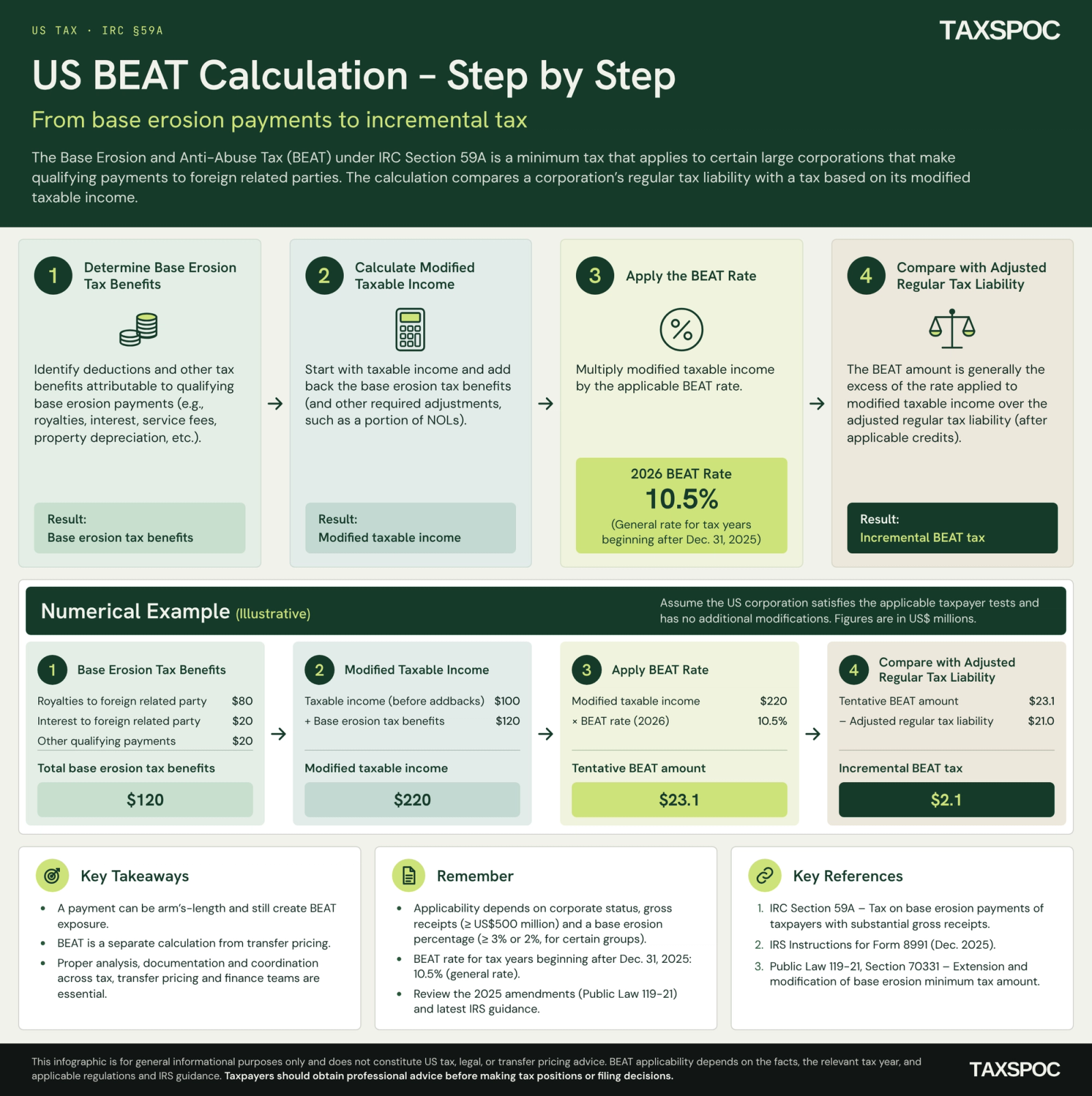
Figure 1. US BEAT calculation framework and illustrative 2026 example.
5. Numerical case study: A US subsidiary paying royalties overseas
Consider a hypothetical US corporation that is part of a multinational group. It makes deductible royalty payments to a foreign related party for the use of intellectual property. Assume the following figures for a tax year beginning in 2026:
| Particulars | Amount |
|---|---|
| US taxable income before BEAT addbacks | US$100 million |
| Base erosion tax benefits | US$120 million |
| Modified taxable income | US$220 million |
| Illustrative adjusted regular tax liability | US$21 million |
| Applicable BEAT rate | 10.5% |
For simplicity, assume the corporation satisfies the applicable taxpayer tests, has no additional modified taxable income adjustments, and has an adjusted regular tax liability of US$21 million after applying the relevant statutory rules.
Step 1: Calculate modified taxable income
US$100 million + US$120 million = US$220 million
Step 2: Apply the BEAT rate
US$220 million × 10.5% = US$23.1 million
Step 3: Compare with adjusted regular tax liability
US$23.1 million − US$21 million = US$2.1 million
On these simplified assumptions, the corporation would have a BEAT amount of US$2.1 million. The actual computation must account for all applicable statutory adjustments, credits, deductions, and other relevant rules.
What does this example tell us?
The US corporation may have established an arm’s-length royalty using a benchmarking analysis and appropriate transfer pricing documentation. That work remains important, but it does not automatically eliminate BEAT exposure. BEAT is a separate tax computation. A deductible royalty can be commercially justified and appropriately priced yet still contribute to modified taxable income.
This is why transfer pricing compliance, and BEAT analysis should be coordinated but not treated as interchangeable exercises.
6. The connection between BEAT and transfer pricing
For transfer pricing professionals, BEAT creates an additional layer of analysis beyond the determination of an arm's-length price.
Arm's-length pricing does not equal BEAT exemption
Section 482 and its regulations govern the allocation of income and deductions among related parties to prevent the distortion of taxable income. BEAT, by contrast, focuses on specified payments and tax benefits under Section 59A.
Consequently, a royalty supported by a comparable uncontrolled price analysis, or a service fee supported by a transactional net margin method (TNMM) analysis, may still create BEAT exposure if the payment meets the BEAT definition.
Benchmarking remains important
Although benchmarking does not determine BEAT applicability on its own, it remains critical for establishing the arm's-length nature of intercompany charges. For royalties, the analysis may involve comparable licensing agreements, the nature of the intangible, exclusivity, geographic rights, contractual terms, and the functions performed by the parties.
For support services, the analysis may involve the nature of the services, the benefit received by the US entity, the cost base, allocation keys, and the appropriate markup. The BEAT review should build on this analysis without confusing an arm's-length conclusion with a statutory tax exception.
Service cost method and markup analysis
The services cost method (SCM) can be particularly relevant when assessing qualifying intercompany services. Where the statutory and regulatory conditions are satisfied, the qualifying total services cost may be excluded from base erosion payments, while the markup component may remain within scope.
For example, a qualifying service charge comprising US$10 million of eligible service costs and a US$1 million markup should not automatically be treated as either entirely excluded or entirely subject to BEAT. The facts, eligibility conditions, applicable cost and markup rules must be examined to determine the correct treatment.
Documentation and data alignment
A robust BEAT process requires coordination across tax, transfer pricing, accounting, and finance teams. Useful information includes:
-
A complete inventory of payments to foreign related parties.
-
General ledger and tax return reconciliations.
-
Intercompany agreements and support invoices.
-
Transfer pricing policies, benchmarking studies, and functional analyses.
-
Documentation supporting services cost method eligibility and cost allocations.
-
Information needed to calculate the base erosion percentage and modified taxable income.
-
Reconciliations to Form 8991 and other applicable US tax filings.
The objective is not simply to identify intercompany payments. It is to determine their legal and tax classification, quantify the resulting tax benefits, and support the final BEAT calculation.
7. A practical framework for BEAT risk assessment
Multinational groups can make their BEAT analysis more effective by following a structured process.
-
Screen the taxpayer. Confirm corporate status, the three-year gross receipts test, relevant aggregation rules, and the base erosion percentage threshold.
-
Map Related-party transactions. Identify royalties, interest, service fees, cost-sharing payments, property acquisitions, and other potentially relevant transactions.
-
Review exceptions. Assess qualifying cost-of-goods-sold amounts, services cost method eligibility, and other statutory or regulatory exclusions.
-
Quantify the tax benefits. Determine the deductible or otherwise relevant tax benefits attributable to qualifying payments, including applicable depreciation and amortization deductions.
-
Model the BEAT calculation. Calculate modified taxable income, apply the relevant tax rate, and compare the result with adjusted regular tax liability after the applicable credit rules.
-
Assess planning options. Consider whether service arrangements, payment structures, cost allocations, or other commercial arrangements warrant review. Any changes must reflect genuine business arrangements and comply with applicable tax law.
-
Maintain supporting documentation. Reconcile the analysis with tax accounting records, intercompany agreements, transfer pricing documentation, and Form 8991.
BEAT should be assessed as part of the wider US international tax compliance process rather than as an isolated calculation prepared at year-end.
Conclusion
BEAT demonstrates why multinational groups need to look beyond the arm's-length principle when assessing the US tax implications of cross-border related-party transactions.
Transfer pricing determines whether intercompany pricing is consistent with the applicable arm's-length standard. BEAT introduces a separate statutory test that can impose additional tax on qualifying large corporations even when their intercompany transactions are appropriately priced.
The 2026 amendments make it especially important to revisit calculations based on older rules, particularly the applicable rate and credit adjustments.
For tax and transfer pricing teams, the most effective approach is to combine transaction-level analysis, accurate tax data, careful evaluation of statutory exceptions, and a documented BEAT computation.
Official sources: 26 U.S.C. § 59A · IRS Instructions for Form 8991 (Rev. December 2025) · Public Law 119-21 (H.R. 1, 119th Congress) · Treas. Reg. § 1.59A-3
Need help with a BEAT review or transfer pricing documentation? Find transfer pricing advisers in the TaxSpoc Directory.
TaxSpoc is a free platform sharing tax news, insights, and practical content with a growing Global Tax Community. Our goal is simple: democratize tax knowledge and make high-quality tax content accessible to everyone—no paywalls, no fluff.
For any questions, clarifications, contributions, or concerns related to this article, don’t hesitate to contact us at hello@taxspoc.com.